Sunday, November 1, 2009

Mexico City, Mexico


El Angel on the Columna de la Independencia .
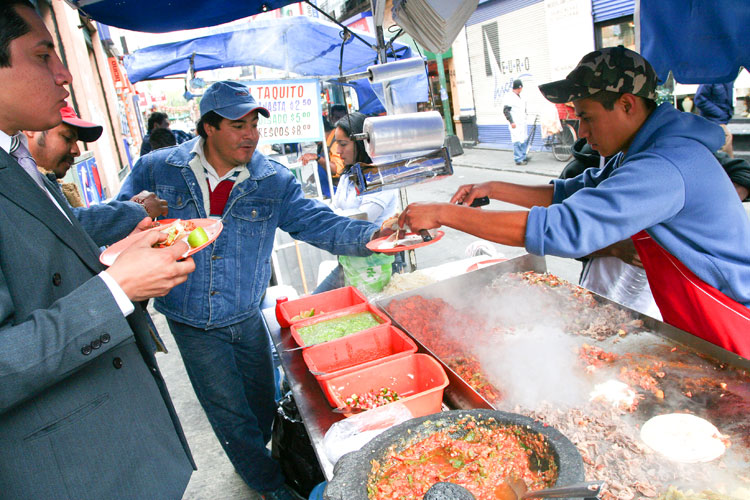
A street vendor in Mexico City selling food to passersby.

Here in Mexico City, there is such a vivid culture and life that surrounds one of the world's biggest cities. In addition to the rich heritage and history that can be found here, there is also a thriving economy. Mexico city is the economic engine of Mexico and more than half of the country's industrial output is produced here in the city. Important industries include textiles, chemicals, furniture, plastics, and metals. Also important is the food and tourism industries that thrive here in Mexico City and bring in millions of dollars into the economy. Also important to Mexico and its population is the informal economy. This includes the thousands of street vendors that sell anything from food and beverages to electronic appliances. These street vendors prove to be a hindrance to other business owner in the city because they can take away from their profit by selling less expensive and similar products on the streets. However, not allowing these vendors to sell items in the streets would cause many to be unemployed and would create even more poverty than there already is in Mexico City. These vendors help to create part of the unique atmosphere in Mexico City and help to increase the standard of living of many by keeping able-bodied workers employed.


Sources:
Picture Sources:

San Francisco, United States


The Golden Gate Bridge, an iconic symbol of San Francisco.


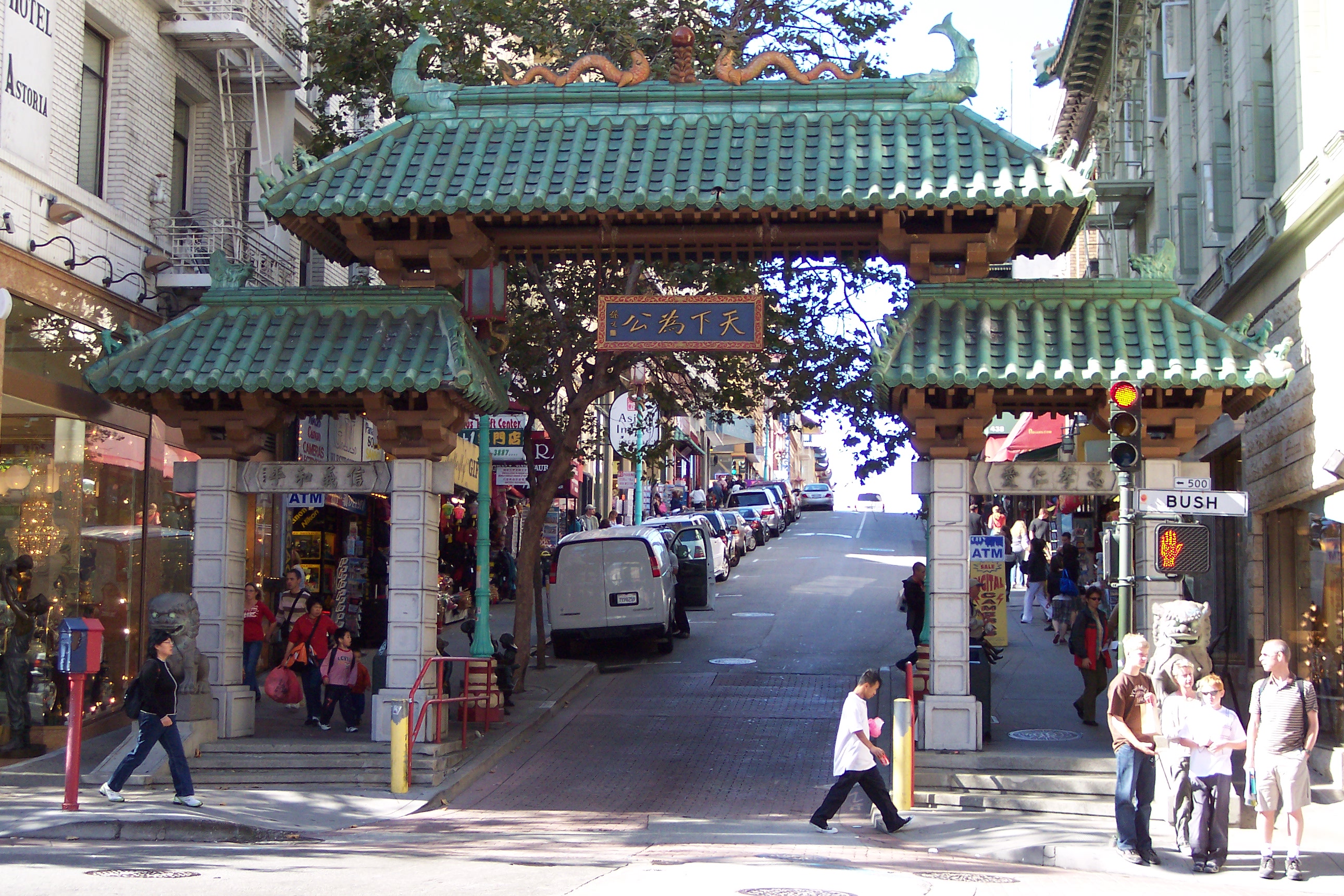
The entrance into San Francisco's Chinatown, the largest outside of Asia.


San Francisco is an amazing city that I have actually had the chance to go to myself when I was younger. There is so much to do in this city, from seeing the Golden Gate Bridge, to taking a trolley ride down the slanted streets, to visiting Chinatown. This city is actually very safe and a pleasant city to visit as long as you stay in the right areas of town. Also, driving may be a little difficult for some people since the streets in San Francisco can be positioned at an angle or very curvy at some spots in the city, so it is best to take caution while driving. If you do not wish to drive, there is an excellent public transportation system set up in San Fransisco that is very tourist friendly. Fog in San Francisco can also be a safety issue if you come unprepared, so pay attention to the weather conditions before you leave to explore the city and pack accordingly. San Francisco also has a very well developed public health system designed to fit a variety of health conditions and diseases. Overall, San Francisco is a very safe and healthy city to live in, with an abundant amount of culture.


Sources:
Picture Sources:

Reykjavik, Iceland


The world's first public hydrogen fueling station in Reykjavik, Iceland.


Hydrogen bus in Reykjavik, Iceland. Its only emission is water.


I am here in Reykjavik, Iceland that is called by many the greenest city in the world. It has made many efforts to remove itself entirely from fossil fuels, and it has greatly invested in new renewable energy resources. These resources include hydrogen and geothermal power. This city uses this renewable energy source to heat many of their homes and businesses all throughout the area. In fact, 89 percent of homes in Iceland are heated by geothermal power and over 54 percent of the primary energy used in Iceland comes from geothermal sources. Hydrogen is also a major renewable resource used in this city. There is a large effort to reduce the amount of fossil-fuel burning cars and replace them with cars that run on renewable energy. In 2003, the first public hydrogen station was opened in Reykjavik to serve the growing number of hydrogen cars. The city has also put into place a public transportation system of hydrogen buses. These buses use only hydrogen as their fuel source, so their only emission is water. Also, students can ride these buses for free to encourage the use of renewable energy. Other initiatives to promote green energy are the increased number of bicycle and walking paths, the strengthening of the recycling program, and free parking to environmentally friendly vehicles. These and many other programs are making Reykjavik an even greener city.


Sources:
http://www.icelandguest.com/in-focus/nr/852/
http://renewable_energy_in_iceland.totallyexplained.com/


Picture Sources:
http://www.greencarreports.com/image/100010510_shell-hydrogen-station-in-reykjavik-iceland
http://www.evworld.com/evalbum/Iceland/Iceland_cute_bus.jpg

Friday, October 30, 2009

Mumbai, India


Mumbai faces a large slum problem.


The water that they do have access to in the slums is often polluted.


Here in Mumbai, they seem to have a bit of a problem with their urban development. Particularly, they have had a problem with slums. Since 1950, the number of slums has risen dramatically, most of which is due to Mumbai's rising population. Before 1950, slums were mostly around mills, and the health problems of these people were generally ignored by head policymakers. From 1950 to 1968, the amount of slums increased by 18 percent, and by 1980 slum dwellers made up half of the city's population. Today, about 60 percent of Mumbai's 17 million people is made of of slum dwellers. The people in these slums live in horrible conditions. They often have to face issues like lack of water, constant migration., pollution, lack of public transportation, and housing shortages. Also, the rate of infant mortally in Mumbai is very high, and the hospital they have there are often overcrowded. Most people in the slums have to rely on private doctors that do not have any formal training or qualifications, or they have to go without medical care. Slums can also be knee deep in water when the monsoon season comes, making the risk of water-born diseases even greater than it is normally.


Sources:
http://www.macalester.edu/courses/GEOG61/espencer/slums.html
http://www.mumbai77.com/pages/mumbai-slums/


Picture Sources:

http://static.panoramio.com/photos/original/1526900.jpg

http://media.nowpublic.net/images//06/2/0620e25f3288c7ee4a9feb28ee406975.jpg

Monday, October 26, 2009

Beijing, China


The Emperor's throne, inside the Forbidden City.


Tienanmen Square, entrance to the Forbidden City

Beijing is a city that has so much history! I saw this throughout the city in a blend of old and new as the city modernizes with new buildings and a new lifestyle. This is easily shown in
Beijing's skyline. The city has upgraded its infrastructure so much in the past years, and there always seems to be new construction projects going on. Although there are so many new buildings going up in Beijing, the most famous structure of buildings is the Forbidden City, the palace that was constructed in the Ming dynasty by Emperor Yongle. It served as the palace for 14 emperors of the Ming dynasty and 10 emperors of the Qing dynasty. This is the most famous site in Beijing, and it was made a World Cultural Heritage Site by UNESCO in 1987. Another important part of Beijing's history is their transition into a new era of leadership and policy. In 1911, the Qing dynasty collapsed and China fell prey to the Northern Warlords and the Kuomintang. But on January 31, 1949, the Chinese People's Liberation Army entered into Beijing, and on October 19, 1949, Chairman Mao Zedong proclaimed the establishment of the People's Republic of China, with Beijing as its capital. This started the communist regime in China that is still present today.

Sources:


Picture sources:

Sunday, October 25, 2009

Tokyo, Japan  東京,日本

Tokyo, a city rich in pop culture. (They even have Starbucks!)

The store Radio Kaikan in Akihabara, Tokyo that sells anime-related goods and electronics.

Konnichiwa from Tokyo! While I was visiting this amazing city, I just was astounded by the abundant amount of pop culture they have here. From sushi to sumo to anime, pop culture is everywhere here in Tokyo. One of the places in Tokyo that this is really evident is the region known as Akihabara (Akiba for short). Known by many as "Electric Town", this area of Tokyo sells electronics and anime-related goods at discount prices, and it even has stores called "Duty-free shops" that sell tax-free electronics. These shops usually have staff members that speak English, as well as other languages, so it is very easy for a foreigner to shop at one of these stores. One of the great things about this city is that many locals will go out of their way to help you if you seem lost or have questions. Also, foreigners aren't expected to follow many of the Japanese customs that are common among local citizens to make it easier for them to travel in Japan. I really recommend traveling to this fascinating city.

Sources:

http://www.tokyo-top-guide.com/Tokyo_Facts.html

http://akihabara-tour.com/en/index.htm

Picture Sources:

http://thewhereblog.blogspot.com/2009_04_01_archive.html

http://z.about.com/d/gojapan/1/5/q/n/akihabara-radiokaikan11.jpg